
Pages
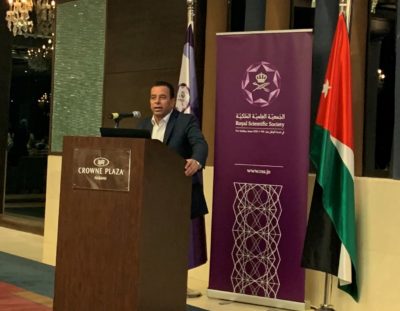
 December 22, 2019Jordan has a range of successful water reuse projects that could inspire other countries. Experts from the ReWater MENA project shared these, as they embark on a plan to expand reuse models in Wadi Assir and the Northern Valley of Jordan.
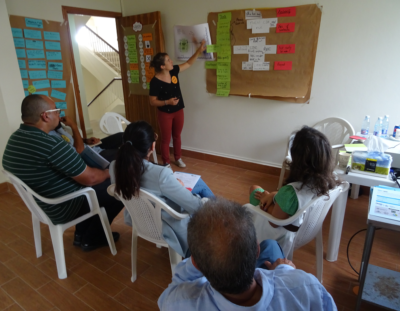 October 14, 2019On Thursday 3rd of October (2019), the ReWater MENA project invited a diverse group of approximately 35 stakeholders to join the project’s first National Learning Alliance (NLA). The NLA took place at the Lebanese Agricultural Research Institute (LARI) in Fanar-Lebanon where the group of participants had the opportunity to discuss and share ideas around to the potential of using recycled water in agriculture in Lebanon.
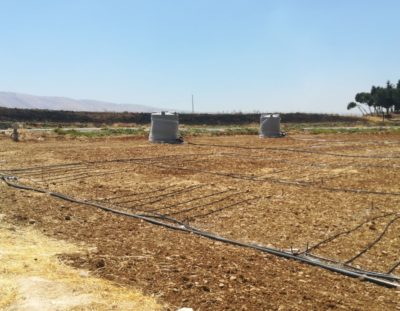 August 18, 2019In July 2019, the Lebanese Agricultural Research Institute (LARI), a key partner of the ReWater MENA project in Lebanon, kicked off a two year-field trial in the Bekaa valley. Established at LARI’s Tel Amara station in central Bekaa, on the right bank of the Litani River, this pilot will serve to assess the health and environmental risks associated with irrigating fresh vegetables from different water sources of varying quality.
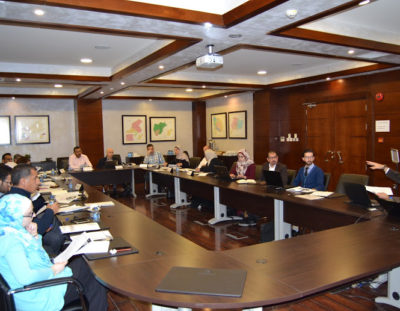
 August 5, 2019The ReWater MENA project held its first National Learning Alliance (NLA) meeting in Jordan on 17 July 2019. The aim of the meeting was to introduce the ReWater MENA project from a regional perspective to key stakeholders. Representatives from government, academia and non-governmental organizations participated. The program included an overview of the ReWater MENA project in the Middle East and North Africa by Dr. Gihan Bayoumi, Regional Project Manager. Implemented in Lebanon, Egypt and Jordan, the project tackles Goal 6 of the Sustainable Development Goals (SDGs). Dr. Bayoumi, stressed that water is a scarce resource and that sustainable strategies for safe reuse of water must be implemented.
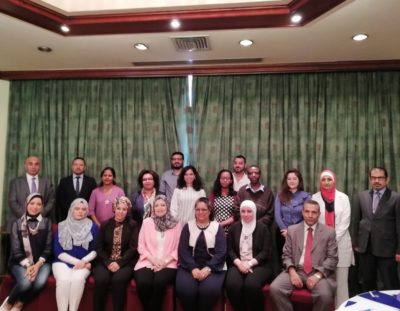 July 8, 2019Unlocking the potential of gender mainstreaming in the MENA region’s water reuse sector was the focus of a 3-day workshop held from 18-20th June in Cairo. The workshop, convened by the ReWater MENA project, was designed to provide the participants with ideas on how to mainstream gender in their work plans.
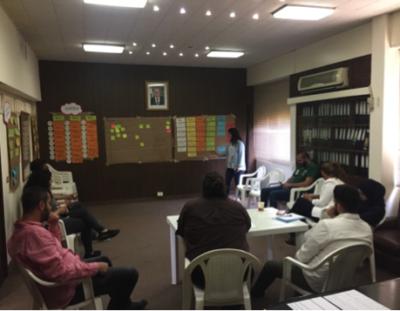 July 8, 2019With public participation seen as key to long-term results, IWMI’s ReWater MENA project is working with local partners to build skills and launch participatory processes. The SIDA funded- project in Lebanon recently facilitated a three-day training on «Public Participation» at the Lebanese Agricultural Research Institute (LARI), from 27 to 29 May 2019. The facilitators, LISODE, are a French enterprise that guides the participatory processes in the project and ensures all project’s national and local activities are being implemented in a participatory way. Processes are aimed at involving and engaging all stakeholders in research and decision-making steps, starting from the national institutions to the end-users.
 June 10, 2019The ReWater MENA project team, accompanied by representatives from Lisode, conducted a field visit to a water and wastewater treatment plant in Matrouh on May 22, 2019. Matrouh is a coastal governorate located 440 kilometers northwest of Cairo, overlooking the Mediterranean Sea.
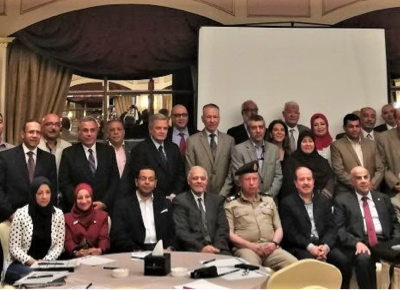 June 2, 2019The ReWater MENA project launched its first national learning alliance (NLA) in Egypt on May 20, 2019. The NLA was organized by a project partner – the Center for Environment and Development of the Arab Region and Europe (CEDARE) – in cooperation with the project as well as the International Center for Agricultural Research (ICARDA). CEDARE and ICARDA are leading the implementation of project activities in Egypt. Lisode, the project partner responsible for stakeholder engagement, facilitated brainstorming and discussions during the launch event.
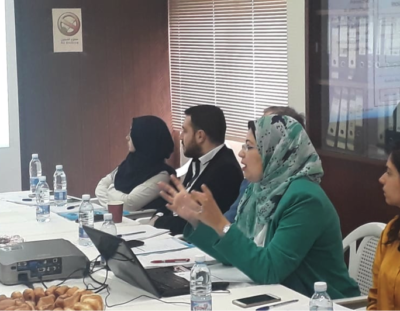 May 14, 2019As population grows and farming expands, the demand for water is steadily rising. Massive human displacement along with other pressures, such as climate change, further aggravates water stress in our region. To meet this challenge, we need innovative water management solutions, including more safe water reuse practices, an approach which is implemented by the International WATER Management Institute (IWMI) through its project, ReWater MENA.
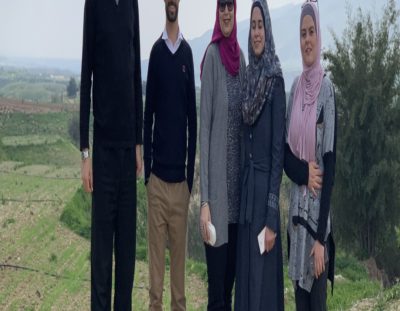 April 8, 2019On March 27, 2019, IWMI’s ReWater MENA Project team, accompanied by colleagues from the Royal Scientific Society (RSS), made field visits in the Jordan Valley to assess potential for the development of water reuse models. The visit began in the middle Jordan Valley (Al Aghwar Al Wosta) in Dir Ghalla, where mostly treated wastewater from the Al Samra treatment plant is used. The main objective was to identify agricultural areas that have been irrigated with treated wastewater for 20 years, 10 years and 5 years. The project will study the long-term effect of using treated wastewater in these areas, compared to another area that has the same climate and agronomic conditions but is irrigated with freshwater.
December 22, 2019
Jordan has a range of successful water reuse projects that could inspire other countries. Experts from the ReWater MENA project shared these, as they embark on a plan to expand reuse models in Wadi Assir and the Northern Valley of Jordan.
October 14, 2019
On Thursday 3rd of October (2019), the ReWater MENA project invited a diverse group of approximately 35 stakeholders to join the project’s first National Learning Alliance (NLA). The NLA took place at the Lebanese Agricultural Research Institute (LARI) in Fanar-Lebanon where the group of participants had the opportunity to discuss and share ideas around to the potential of using recycled water in agriculture in Lebanon.
August 18, 2019
In July 2019, the Lebanese Agricultural Research Institute (LARI), a key partner of the ReWater MENA project in Lebanon, kicked off a two year-field trial in the Bekaa valley. Established at LARI’s Tel Amara station in central Bekaa, on the right bank of the Litani River, this pilot will serve to assess the health and environmental risks associated with irrigating fresh vegetables from different water sources of varying quality.
August 5, 2019
The ReWater MENA project held its first National Learning Alliance (NLA) meeting in Jordan on 17 July 2019. The aim of the meeting was to introduce the ReWater MENA project from a regional perspective to key stakeholders. Representatives from government, academia and non-governmental organizations participated. The program included an overview of the ReWater MENA project in the Middle East and North Africa by Dr. Gihan Bayoumi, Regional Project Manager. Implemented in Lebanon, Egypt and Jordan, the project tackles Goal 6 of the Sustainable Development Goals (SDGs). Dr. Bayoumi, stressed that water is a scarce resource and that sustainable strategies for safe reuse of water must be implemented.
July 8, 2019
Unlocking the potential of gender mainstreaming in the MENA region’s water reuse sector was the focus of a 3-day workshop held from 18-20th June in Cairo. The workshop, convened by the ReWater MENA project, was designed to provide the participants with ideas on how to mainstream gender in their work plans.
July 8, 2019
With public participation seen as key to long-term results, IWMI’s ReWater MENA project is working with local partners to build skills and launch participatory processes. The SIDA funded- project in Lebanon recently facilitated a three-day training on «Public Participation» at the Lebanese Agricultural Research Institute (LARI), from 27 to 29 May 2019. The facilitators, LISODE, are a French enterprise that guides the participatory processes in the project and ensures all project’s national and local activities are being implemented in a participatory way. Processes are aimed at involving and engaging all stakeholders in research and decision-making steps, starting from the national institutions to the end-users.
June 10, 2019
The ReWater MENA project team, accompanied by representatives from Lisode, conducted a field visit to a water and wastewater treatment plant in Matrouh on May 22, 2019. Matrouh is a coastal governorate located 440 kilometers northwest of Cairo, overlooking the Mediterranean Sea.
June 2, 2019
The ReWater MENA project launched its first national learning alliance (NLA) in Egypt on May 20, 2019. The NLA was organized by a project partner – the Center for Environment and Development of the Arab Region and Europe (CEDARE) – in cooperation with the project as well as the International Center for Agricultural Research (ICARDA). CEDARE and ICARDA are leading the implementation of project activities in Egypt. Lisode, the project partner responsible for stakeholder engagement, facilitated brainstorming and discussions during the launch event.
May 14, 2019
As population grows and farming expands, the demand for water is steadily rising. Massive human displacement along with other pressures, such as climate change, further aggravates water stress in our region. To meet this challenge, we need innovative water management solutions, including more safe water reuse practices, an approach which is implemented by the International WATER Management Institute (IWMI) through its project, ReWater MENA.
April 8, 2019
On March 27, 2019, IWMI’s ReWater MENA Project team, accompanied by colleagues from the Royal Scientific Society (RSS), made field visits in the Jordan Valley to assess potential for the development of water reuse models. The visit began in the middle Jordan Valley (Al Aghwar Al Wosta) in Dir Ghalla, where mostly treated wastewater from the Al Samra treatment plant is used. The main objective was to identify agricultural areas that have been irrigated with treated wastewater for 20 years, 10 years and 5 years. The project will study the long-term effect of using treated wastewater in these areas, compared to another area that has the same climate and agronomic conditions but is irrigated with freshwater.